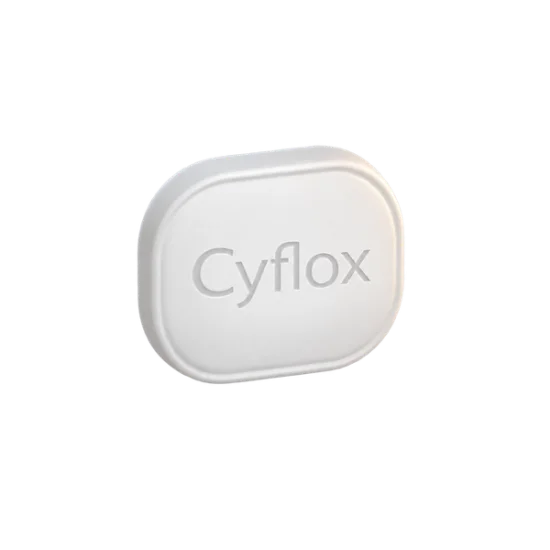
Cyflox
4 (3 customer reviews)Ciprofloxacin is used for selected infections where testing, infection severity, and local resistance patterns support its use. It is not a general symptom-relief treatment. Fever, pain, burning during urination, or diarrhea can have causes that do not respond to an antibiotic.
Overview
Cyflox contains ciprofloxacin, a fluoroquinolone antibacterial agent. Fluoroquinolones work differently from penicillins and macrolides: they interfere with bacterial enzymes involved in DNA replication, so bacteria cannot reproduce normally.
Therapeutic indications
Cyflox may be prescribed for certain urinary tract, gastrointestinal, skin, bone, joint, or respiratory bacterial infections. The exact indication depends on the organism, the infection site, kidney function, prior antibiotic exposure, and whether a narrower-spectrum antibiotic can work.
Antibiotic selection is deliberate. Culture testing can identify the organism and show which antibiotics are likely to work.
The FDA advises reserving systemic fluoroquinolones for patients without suitable alternative options in certain uncomplicated infections because serious adverse reactions can occur. [2]
How it affects the body
Its antibacterial effect comes from blocking DNA gyrase and topoisomerase IV, enzymes bacteria need to copy and repair genetic material. This mechanism can kill susceptible bacteria, yet resistance may limit the result in some infections. [1]
Ciprofloxacin enters susceptible bacteria and inhibits DNA gyrase and topoisomerase IV, enzymes essential for DNA coiling, copying, repair, and cell division.
Bacterial resistance can develop through mutations in these enzyme targets, reduced drug entry, or active drug efflux from the bacterial cell.
Reasons not to use it
Cyflox is not for you if you have had a serious allergic reaction to ciprofloxacin or another fluoroquinolone antibiotic. It is also unsuitable with tizanidine because ciprofloxacin can markedly increase tizanidine exposure and cause dangerous low blood pressure and sedation.
Extra review is needed before Cyflox use in people with:
- Previous fluoroquinolone-associated tendon injury.
- Myasthenia gravis, because fluoroquinolones can worsen muscle weakness.
- A history of seizures or conditions that increase seizure risk.
- Known aortic aneurysm, previous aortic dissection, or strong vascular risk factors.
- Significant heart-rhythm disorders or low potassium or magnesium.
- Diabetes treated with glucose-lowering medicines.
- Kidney disease, dialysis, organ-transplant history, or corticosteroid treatment.
- Pregnancy or breastfeeding.
The EMA restricted systemic fluoroquinolone use in 2019 because rare long-lasting reactions involving tendons, muscles, joints, and the nervous system can occur. [4]
When this is not for you
Cyflox is not for you if you have had a serious allergic reaction to ciprofloxacin or another fluoroquinolone antibiotic. It is also unsuitable with tizanidine because ciprofloxacin can markedly increase tizanidine exposure and cause dangerous low blood pressure and sedation.
Possible side effects
Nausea, diarrhea, abdominal discomfort, headache, dizziness, and sleep disturbance can occur with ciprofloxacin. Mild digestive symptoms may settle, yet severe, persistent, or bloody diarrhea needs prompt clinical assessment because antibiotics can disrupt intestinal bacteria and trigger Clostridioides difficile infection.
Stop Cyflox and seek urgent medical assessment for tendon pain, tendon swelling, sudden joint weakness, numbness, burning sensations, severe agitation, hallucinations, fainting, irregular heartbeat, facial swelling, or trouble breathing. These reactions are uncommon, but they need immediate attention.
Tendon injury can involve the Achilles tendon, shoulder, hand, or other sites. Risk rises in older adults, people using corticosteroids, transplant recipients, and people with kidney disease. The FDA has issued multiple fluoroquinolone safety communications addressing disabling musculoskeletal, neurological, and mental-health effects. [3]
Formulation
Active Ingredient and Antibiotic Class
Ciprofloxacin belongs to the fluoroquinolone class. Its antibacterial effect comes from blocking DNA gyrase and topoisomerase IV, enzymes bacteria need to copy and repair genetic material. This mechanism can kill susceptible bacteria, yet resistance may limit the result in some infections. [1]
Dosage and administration
Cyflox treatment is individualized. The prescribed amount, dosing interval, and treatment duration depend on the infection being treated, bacterial susceptibility, renal function, age, and the clinical response.
Ciprofloxacin schedules should not be adjusted independently. Taking extra doses does not make an antibiotic work faster and can raise the risk of adverse effects.
- Take Cyflox exactly at the interval stated in the prescription directions.
- Continue for the prescribed course unless the prescriber changes the plan or a serious reaction occurs.
- Do not double a dose after forgetting one.
- Reduced kidney function may require a different interval or amount.
- A prior fluoroquinolone reaction should be discussed before treatment begins.
Take Cyflox with water at a consistent time each day. It may be taken with a meal if stomach upset occurs, though mineral-containing products need careful timing because they can bind ciprofloxacin in the digestive tract and reduce absorption.
Separate Cyflox from antacids and products containing magnesium, aluminum, calcium, iron, or zinc. This includes many indigestion remedies, multivitamins, mineral supplements, and some nutritional drinks.
If a dose is missed, take it when remembered unless the next scheduled dose is near. In that situation, skip the missed dose and resume the regular schedule. Do not take two doses together.
A small but relevant detail: calcium-fortified drinks or dairy products should not be used alone as the vehicle for a Cyflox dose. Normal meals can be managed according to prescription directions, but a yogurt drink taken specifically with the tablet may reduce absorption.
Comparison
Cyflox contains ciprofloxacin, while other antibiotics work through different bacterial targets. A prescriber may select another option when culture results show resistance, when fluoroquinolone risks are unsuitable, or when a narrower antibacterial spectrum is preferred.
Ciprofloxacin is valued for activity against certain Gram-negative organisms and for its oral absorption. Its limitation is the fluoroquinolone safety profile, which includes tendon, nerve, neurological, and blood-glucose warnings.
Common mistakes
- Taking an antacid or multivitamin close to the antibiotic dose.
- Stopping as soon as symptoms improve without clinical direction.
- Taking a missed dose together with the next scheduled dose.
- Continuing intense exercise despite new heel, calf, shoulder, or hand pain.
- Omitting diabetes medicines, corticosteroids, or blood thinners from the medication history.
- Reusing ciprofloxacin from a previous illness.
- Assuming all urinary, respiratory, or digestive symptoms need the same antibiotic.
One issue that patients frequently miss is hydration during diarrhea or fever. Dehydration can worsen dizziness and place additional stress on kidney function, especially in older adults.
What doctors say
In clinical practice, prescribers tend to use ciprofloxacin when its antibacterial spectrum fits the likely pathogen and a safer alternative is not suitable. The goal is not merely to suppress symptoms; it is to treat a confirmed or probable susceptible bacterial infection without exposing the patient to unnecessary broad-spectrum antibiotic risk.
Doctors often focus first on infection location, kidney function, previous antibiotic reactions, corticosteroid exposure, vascular history, and the full medicine list. These details can change the decision quickly.
A lack of improvement can mean resistance, an incorrect diagnosis, poor absorption caused by mineral products, an abscess requiring drainage, or a complication that needs reassessment. It does not automatically mean the dose should be increased.
Common questions
Can Cyflox be used under age 18?
Cyflox is not routinely used in children and adolescents because fluoroquinolones can affect developing joints and tendons. The FDA recognizes limited pediatric uses for ciprofloxacin when the expected benefit outweighs the risk, such as certain serious infections with few alternatives. A pediatric prescriber must select the indication, duration, and monitoring plan. The 2016 FDA prescribing information for ciprofloxacin describes pediatric use as restricted to specific clinical circumstances.
How does Cyflox differ from other antibiotics?
Cyflox contains ciprofloxacin, which belongs to the fluoroquinolone class and disrupts bacterial DNA replication. Beta-lactam antibiotics act on the bacterial cell wall, while macrolides inhibit protein synthesis. The best choice depends on the infection site, likely bacteria, culture results, allergies, kidney function, and adverse-effect risks. The EMA’s 2019 fluoroquinolone restrictions reinforce that ciprofloxacin is reserved for situations where its benefits justify its risks.
How should Cyflox be stored at home and while travelling?
Keep Cyflox in a dry place at controlled room temperature and away from excessive heat, moisture, and direct sunlight. Carry it in hand luggage during travel when possible, since extreme temperatures in vehicles or checked baggage can be unsuitable for medicines. Keep it away from children and pets. FDA product information published in 2016 provides the storage conditions for ciprofloxacin products.
How long does a Cyflox course last, and is long-term use acceptable?
Course length varies with the infection, bacterial susceptibility, infection severity, and kidney function, so there is no single duration that suits everyone. Long-term or repeated use is not routine because fluoroquinolones can cause serious reactions and encourage resistant bacteria. The prescriber may reassess treatment if symptoms persist, recur, or worsen. FDA safety communications issued in 2016 and 2018 emphasize limiting systemic fluoroquinolones when suitable alternatives exist.
What should happen if Cyflox does not produce the expected result?
Persistent fever, worsening pain, spreading redness, vomiting, blood in urine, shortness of breath, or worsening urinary symptoms need clinical reassessment. A clinician may review culture results, check whether minerals reduced absorption, evaluate for resistance, or look for a complication that requires another intervention. Do not add doses or combine another antibiotic without medical direction. The WHO’s 2022 AWaRe antibiotic book supports culture-informed prescribing and careful antimicrobial stewardship.
What should be discussed with a doctor before starting Cyflox?
Discuss previous fluoroquinolone reactions, tendon problems, aortic aneurysm or dissection history, myasthenia gravis, seizures, diabetes, kidney disease, pregnancy, breastfeeding, and transplant history. Provide a complete list of medicines, with special attention to corticosteroids, warfarin, theophylline, tizanidine, NSAIDs, heart-rhythm medicines, antacids, and mineral supplements. This review helps identify interaction risks before the first dose. The FDA’s 2018 fluoroquinolone communication highlights the need to consider patient-specific risk factors before prescribing.
Do you offer anonymous delivery?
Your order will be securely packed and shipped within 24 hours. This is exactly what your package will look like (images of an actual item sent). It has the size and look of a regular private letter (9.4x4.3x0.3 in.) and its contents cannot be seen.
Comparison
Amoxil
Ampicillin
Augmentin
Bactrim
Cefadroxil
Cephalexin
Cyflox Use in Kidney Disease, Older Adults, Pregnancy, and Breastfeeding
Kidney function affects how ciprofloxacin leaves the body. Reduced renal clearance can increase drug exposure, so a standard adult schedule cannot be assumed for a person with chronic kidney disease, recent acute kidney injury, or dialysis.
Older adults may be more vulnerable to tendon injury, neurological reactions, blood-glucose changes, and vascular complications. Age alone does not automatically rule out Cyflox, but the expected benefit should clearly outweigh these risks.
Pregnancy and breastfeeding require an individual clinical decision. Ciprofloxacin may be considered when the infection needs treatment and alternatives are less suitable, yet the prescriber should review the infection, bacterial susceptibility, stage of pregnancy, and feeding plan before treatment continues.
Cyflox Pharmacology and Antibacterial Resistance
Ciprofloxacin has the Anatomical Therapeutic Chemical classification code J01MA02. It enters susceptible bacteria and inhibits DNA gyrase and topoisomerase IV, enzymes essential for DNA coiling, copying, repair, and cell division.
Bacterial resistance can develop through mutations in these enzyme targets, reduced drug entry, or active drug efflux from the bacterial cell. This is why a drug that worked for a previous infection may not be appropriate for a new one, even if symptoms feel similar.
The WHO AWaRe framework, with related stewardship guidance from NICE and the CDC, places ciprofloxacin among antibiotics that require stewardship because resistance selection and adverse effects must be balanced against clinical benefit. [5]
How should Cyflox be stored at home and while travelling?
Keep Cyflox in a dry place at controlled room temperature and away from excessive heat, moisture, and direct sunlight. Carry it in hand luggage during travel when possible, since extreme temperatures in vehicles or checked baggage can be unsuitable for medicines. Keep it away from children and pets. FDA product information published in 2016 provides the storage conditions for ciprofloxacin products.
Customer Feedback on Cyflox
Sources
- Food and Drug Administration (2016). CIPRO (ciprofloxacin hydrochloride) prescribing information.
- Food and Drug Administration (2016). FDA advises restricting fluoroquinolone antibiotic use for certain uncomplicated infections; warns about disabling side effects that can occur together.
- Food and Drug Administration (2018). FDA reinforces safety information about serious low blood sugar levels and mental health side effects with fluoroquinolone antibiotics.
- European Medicines Agency (2019). Disabling and potentially permanent side effects lead to suspension or restrictions of quinolone and fluoroquinolone antibiotics.
- World Health Organization (2022). The WHO AWaRe (Access, Watch, Reserve) antibiotic book.