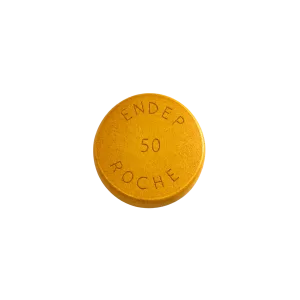
Desyrel
4.2 (5 customer reviews)Taken orally, usually as an evening dose when sedation is likely, Desyrel contains trazodone and is prescribed for major depressive disorder. Its serotonin-modulating action can improve depressive symptoms, while its sedating properties may also support sleep in selected clinician-directed situations.
Overview
Desyrel is the brand name for trazodone hydrochloride, an antidepressant. Hydrochloride describes the salt form used to make trazodone suitable for oral administration; it does not create a separate active drug.
Active Ingredient and Drug Classification
Trazodone belongs to a group called serotonin antagonist and reuptake inhibitors, often shortened to SARIs. It is an antidepressant with effects on serotonin receptors and serotonin reuptake.
Therapeutic indications
Desyrel is prescribed for major depressive disorder, a condition marked by persistent low mood or loss of interest alongside symptoms such as sleep change, low energy, impaired concentration, or altered appetite. It is not intended for occasional sadness or a single difficult week. FDA prescribing information identifies trazodone as an antidepressant for major depressive disorder. [1]
Off-Label Uses for Sleep and PTSD Symptoms
Clinicians sometimes prescribe trazodone off-label for insomnia or sleep disturbance. Off-label means a clinician uses an approved medicine for a purpose not listed as its primary FDA indication; it does not mean the treatment is unsuitable or experimental.
Its sedating effect may help sleep onset for some people, especially when depression and disrupted sleep occur together. It is not a universal treatment for insomnia, and morning sedation may outweigh the sleep benefit for some patients. The American Academy of Sleep Medicine guideline advises against routine trazodone use for chronic insomnia because supporting evidence is limited. [3]
Insomnia and Sleep Disturbance
Persistent insomnia deserves a fuller assessment. Sleep apnea, restless legs syndrome, stimulant use, alcohol, pain, anxiety, depression, and irregular sleep schedules can all disrupt sleep.
Trazodone may help a person fall asleep without correcting the underlying cause. Snoring with breathing pauses, repeated nighttime choking, or severe daytime sleepiness needs medical assessment.
PTSD-Related Sleep Symptoms
Some clinicians use trazodone for PTSD-related insomnia or distressing nighttime symptoms. It does not treat every part of PTSD, including trauma memories, avoidance, or hypervigilance.
Nightmares, intense agitation, self-harm thoughts, or worsening anxiety call for prompt clinical support. WHO guidance on mental health care emphasizes active assessment of suicide risk when depressive symptoms worsen.

How it affects the body
Serotonin is a neurotransmitter: a chemical messenger involved in mood, sleep, appetite, pain processing, and emotional regulation. Desyrel reduces serotonin reuptake, leaving more serotonin available between nerve cells, while also blocking selected serotonin receptors.
This receptor activity helps explain why trazodone differs from many SSRIs and serotonin-norepinephrine reuptake inhibitors, or SNRIs. Sedation may occur because trazodone also affects histamine and alpha-1 adrenergic receptors, which influence alertness and blood pressure. A review in CNS Drugs describes trazodone’s mixed serotonin and receptor activity, rather than a simple serotonin increase. [2]
Serotonin Signaling and Receptor Activity
Mood improvement develops gradually because brain signaling and daily functioning need time to adapt. Sleepiness can appear much sooner.
Drowsiness and dizziness are common early experiences. Some people find these effects ease, while others continue to notice next-day grogginess.
Differences From SSRIs and SNRIs
SSRIs primarily block serotonin reuptake. SNRIs affect serotonin and norepinephrine reuptake. Trazodone has a broader receptor profile and is often more sedating than either class.
Reasons not to use it
Desyrel is not for you if you have had a serious allergic reaction to trazodone or use a monoamine oxidase inhibitor, known as an MAOI. MAOIs include certain antidepressants and medicines used for Parkinson’s disease or serious infections.
Extra caution is needed with heart rhythm disorders, recent heart attack, low blood pressure, bipolar-spectrum illness, seizure history, glaucoma, liver disease, kidney disease, or a personal history of prolonged painful erections.
When this is not for you
Desyrel is not for you if you have had a serious allergic reaction to trazodone or use a monoamine oxidase inhibitor, known as an MAOI. MAOIs include certain antidepressants and medicines used for Parkinson’s disease or serious infections.
Possible side effects
Drowsiness, sedation, dizziness, dry mouth, nausea, and headache are common effects of trazodone. They can matter more in daily life than a simple side-effect list suggests.
The first few doses can make ordinary tasks feel slower. A person may notice this when answering early emails, climbing stairs, or driving home after an evening shift.
Sedation and Daytime Impairment
Drowsiness may affect reaction time, balance, and concentration. Dizziness can be worse after standing quickly, especially during nighttime bathroom trips.
Digestive and Mouth-Related Effects
Dry mouth can make swallowing, speaking, and dental comfort harder. Regular sips of water, sugar-free gum, and careful brushing can help protect oral comfort.
Nausea is often milder when the medicine is taken consistently as prescribed. Persistent vomiting, dehydration, or inability to keep fluids down needs medical review.
Headache and Symptom Monitoring
Headache may occur during treatment. A new severe headache with confusion, chest pain, weakness, fever, or vision changes needs urgent assessment rather than self-treatment alone.
Formulation
Desyrel is the brand name for trazodone hydrochloride, an antidepressant. Hydrochloride describes the salt form used to make trazodone suitable for oral administration; it does not create a separate active drug.
Active Ingredient and Drug Classification
Trazodone belongs to a group called serotonin antagonist and reuptake inhibitors, often shortened to SARIs. It is an antidepressant with effects on serotonin receptors and serotonin reuptake.
Desyrel is prescribed for major depressive disorder, a condition marked by persistent low mood or loss of interest alongside symptoms such as sleep change, low energy, impaired concentration, or altered appetite. It is not intended for occasional sadness or a single difficult week. FDA prescribing information identifies trazodone as an antidepressant for major depressive disorder. [1]
Individual Treatment Planning
The amount per intake is set individually for each person rather than being one fixed number. A prescriber considers symptom pattern, age, other medicines, heart health, liver or kidney function, and previous responses to antidepressants.
Dosage and administration
- Dose: Take the individually prescribed amount of trazodone; the amount per intake is set for each person rather than fixed for everyone.
- Frequency: Take it at the prescribed frequency and do not take an extra dose to make up for a missed dose.
- Timing: Take the dose orally, usually in the evening when sedation is likely.
- Duration: Continue for the duration prescribed by the clinician.
- Route: Take by mouth.
Comparison
Antidepressant selection depends on the diagnosis, dominant symptoms, sleep pattern, medical history, prior treatment response, and likely adverse effects. There is no single class that suits every person with depression.
Sedation and Sleep Considerations
Trazodone’s sedating profile can be useful when insomnia accompanies depression. That same property can limit driving, work performance, and balance.
SSRIs and SNRIs may be less sedating for some people. They can also disturb sleep or cause activation early in treatment.
Sexual, Gastrointestinal, and Activation Considerations
Sexual side effects may occur with many serotonin-based antidepressants. Trazodone may have a lower likelihood of some sexual effects for certain patients, though its rare priapism risk is a distinct concern.
Nausea, bowel changes, headache, and anxiety-like activation may occur with SSRIs or SNRIs. A detailed history of past adverse effects helps guide the next treatment choice.
Common mistakes
In clinical practice, prescribers often see problems caused by dose doubling, unreported sedatives, alcohol use, or driving before the person knows how trazodone affects them. Consistent use and timely follow-up help separate temporary adjustment effects from symptoms that need a regimen change.
What doctors say
Doctors also look beyond sleep. Better sleep can be valuable, but improved sleep alone does not confirm that depression is adequately treated.
Common questions
Is Desyrel suitable for older adults?
Desyrel can be used in older adults when a prescriber judges that the expected benefit outweighs risks. Older people may be more sensitive to drowsiness, low blood pressure after standing, confusion, and falls. The FDA’s 2017 trazodone prescribing information advises careful dose selection and monitoring in this group. Medication lists should be reviewed for sedatives, blood-pressure medicines, and medicines that affect heart rhythm. A follow-up review can help identify excessive sedation before a fall occurs.
Does Desyrel cause priapism?
Yes, trazodone can rarely cause priapism, a prolonged and painful erection that does not resolve. This is an emergency because delayed treatment can injure erectile tissue. FDA information issued in 2017 lists priapism among serious trazodone warnings. Stop sexual activity and seek emergency care immediately if an erection is painful or prolonged.
Which symptoms mean I should stop Desyrel and seek urgent medical care?
Emergency symptoms include a prolonged painful erection, severe allergic swelling, trouble breathing, seizures, fainting, severe confusion, or symptoms of serotonin toxicity. New hallucinations, suicidal thoughts, extreme agitation, or rapidly escalating impulsive behavior also require urgent evaluation. WHO mental health guidance from 2016 supports immediate assessment when suicide risk or severe behavioral change emerges. Mild dry mouth or a mild headache is different from these red flags.
Can Desyrel be used during pregnancy or breastfeeding?
Pregnancy and breastfeeding decisions require an individualized assessment of depression severity, past relapse, and treatment alternatives. Trazodone crosses into breast milk in small amounts, and available pregnancy data are limited compared with data for some other antidepressants. The FDA’s 2017 prescribing information advises weighing maternal benefit against potential fetal or infant risk. Do not start or stop Desyrel during pregnancy without a clinician managing the decision.
Can I drink alcohol while using Desyrel?
Alcohol should be avoided because it can intensify drowsiness, dizziness, poor coordination, and low blood pressure. The combination can make driving, stairs, and nighttime walking less safe. FDA trazodone guidance from 2017 warns that alcohol and central nervous system depressants can worsen impairment. This applies even if alcohol does not usually make you sleepy.
Can I drive or work with machinery while taking Desyrel?
Do not drive or operate machinery until you know how Desyrel affects your alertness, balance, and reaction time. Sedation can persist into the next day, especially after treatment begins or the regimen changes. FDA trazodone prescribing information from 2017 warns that drowsiness or dizziness can impair driving and operating machinery. A change in concentration, blurred vision, dizziness, or slowed reactions means the activity should wait.
Do you offer anonymous delivery?
Your order will be securely packed and shipped within 24 hours. This is exactly what your package will look like (images of an actual item sent). It has the size and look of a regular private letter (9.4x4.3x0.3 in.) and its contents cannot be seen.
Comparison
Customer Feedback on Desyrel
Sources
- FDA (Food and Drug Administration) (2017). Trazodone Hydrochloride Tablets: Prescribing Information.
- PubMed (2013). Trazodone: A Multifunctional Drug With Multimodal Antidepressant Action.
- American Academy of Sleep Medicine (2017). Clinical Practice Guideline for the Pharmacologic Treatment of Chronic Insomnia in Adults.