Skip to content
Save up to 80% Fast & Discrete Delivery
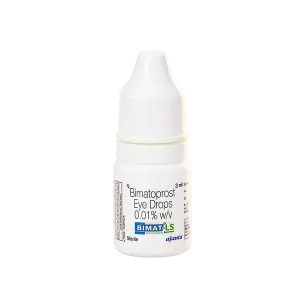
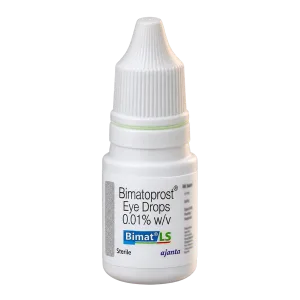
Bimat
Quality products
Fast & Discrete Delivery
Money-back guarantee

Bimat

4.1 (5 customer reviews)
Delivery: 4-7 business days
Payment
24/7 Support
Active ingredient: Bimatoprost

Free bonus tablets with every order: 4 on any order, 8 over $112.00, 12 over $222.88, 16 over $334.88

256-bit SSL
Certified pharmacy
Money-back guarantee

By increasing fluid drainage from the eye, Bimat lowers intraocular pressure and helps reduce strain on the optic nerve. It contains bimatoprost 0.01%, a prostamide eye-drop treatment for adults with open-angle glaucoma or ocular hypertension.

Overview

Bimat contains bimatoprost 0.01% w/v in sterile ophthalmic drops. Bimatoprost is a prostamide, a prostaglandin-related medicine that changes fluid movement inside the eye.

Therapeutic indications

Bimat is used to lower raised intraocular pressure in:

  • Open-angle glaucoma
  • Ocular hypertension
  • People at risk of optic-nerve damage from persistently elevated eye pressure

Bimatoprost is also known to lengthen, thicken, and darken eyelashes. This effect occurs because the medicine influences the eyelash growth cycle, though Bimat eye drops should be used for the eye-pressure indication and regimen prescribed for the individual patient. [1]

For glaucoma and ocular hypertension, Bimat is used as an eye-pressure treatment.

How it affects the body

Bimatoprost increases the outflow of aqueous humor, the clear fluid continually produced inside the eye. When fluid leaves more efficiently, intraocular pressure falls.

Lower pressure reduces mechanical stress on the optic nerve. It cannot restore vision already lost from glaucoma, yet sustained pressure control helps limit further damage.

Its eyelash effect comes from a different visible response. Bimatoprost prolongs the anagen, or active growth, phase of the eyelash cycle. Lashes may become longer, fuller, and darker over time because more follicles remain in the growth phase for longer. Bimatoprost metabolites contribute to activity in ocular tissues, though this is not a reason to use extra drops.

More drops do not lower pressure faster. Extra liquid can run onto the eyelid skin and raise the chance of irritation, darkening, or hair growth outside the intended area.

Reasons not to use it

  • Active eye infection, conjunctivitis, or eyelid inflammation
  • Uveitis or a history of recurrent eye inflammation
  • Macular edema or risk factors for macular edema
  • Previous cataract surgery or other eye surgery
  • Aphakia or a damaged posterior lens capsule
  • Existing glaucoma treatment with other pressure-lowering drops
  • Pregnancy or breastfeeding
  • Contact-lens use
  • Severe asthma or respiratory disease requiring several medicines

Tell the prescriber about every eye drop, oral medicine, and supplement. Combining several prostaglandin-related eye medicines may reduce pressure control. FDA labeling also advises caution in patients with intraocular inflammation and in people at risk of macular edema. [2]

Soft contact lenses should be removed before dosing. They can usually be reinserted after at least 15 minutes, allowing the drop to absorb and reducing preservative exposure to the lens material.

When this is not for you

Bimat is not for you if you have had an allergic reaction to bimatoprost or another component of the eye-drop solution.

Possible side effects

The most frequent local effects of bimatoprost are eye redness, itching, burning, dryness, stinging, or a feeling that something is in the eye. These reactions may be mild and brief, though persistent symptoms deserve clinical review.

Bimatoprost can darken the skin around the eyes. It can also increase eyelash growth, thickness, and pigmentation. Iris color may become darker in some people, and this change can be permanent.

Stop using the drops and seek urgent eye assessment for severe eye pain, major eyelid swelling, facial swelling, rash, sudden blurred vision, light sensitivity, discharge, or a noticeable loss of vision. These symptoms may indicate allergy, infection, inflammation, or another eye problem requiring prompt care.

Rubbing a red or itchy eye tends to worsen surface irritation. People often blame the drop itself when the real trigger is repeated rubbing, makeup residue, or a contaminated bottle tip.

Formulation

Bimat contains bimatoprost 0.01% w/v in sterile ophthalmic drops. Bimatoprost is a prostamide, a prostaglandin-related medicine that changes fluid movement inside the eye.

Bimat is used to lower raised intraocular pressure in:

  • Open-angle glaucoma
  • Ocular hypertension
  • People at risk of optic-nerve damage from persistently elevated eye pressure

Raised eye pressure often causes no symptoms. The goal of treatment is to control pressure before vision is affected.

Bimatoprost is also known to lengthen, thicken, and darken eyelashes. This effect occurs because the medicine influences the eyelash growth cycle, though Bimat eye drops should be used for the eye-pressure indication and regimen prescribed for the individual patient. [1]

Product fact Bimat information
Active ingredient Bimatoprost
Drug class Prostamide ophthalmic medicine
Form Sterile eye drops
Strength 0.01% w/v
Main use Lowering intraocular pressure in glaucoma or ocular hypertension
A dose is decided individually, taking age, other medicines, and eye-health history into account. Do not change the treatment schedule simply because the eye feels normal.

Dosage and administration

For glaucoma and ocular hypertension, Bimat is used as an eye-pressure treatment. The usual clinical approach is one drop in the affected eye or eyes in the evening, unless the prescriber gives a different schedule.

The medicine is intended for regular use. Missing doses repeatedly can allow intraocular pressure to rise again, even when vision still seems unchanged. Eye-pressure monitoring remains essential because glaucoma progression cannot be judged by symptoms alone.

Bimatoprost strengths and formulations are not automatically interchangeable. A clinician may select a different concentration, add another pressure-lowering eye medicine, or adjust the schedule based on pressure response, corneal health, prior surgery, and tolerability.

When more than one eye medicine is prescribed, leave at least five minutes between products. Putting them in back-to-back can wash the first drop out of the eye.

Use Bimat at the same time each evening when prescribed once daily. Wash hands first, tilt the head back, pull down the lower eyelid gently, place one drop into the lower conjunctival pocket, then close the eye without squeezing it tightly.

If a dose is missed, use it when remembered unless the next scheduled dose is near. Skip the forgotten dose in that situation and resume the usual schedule. Do not double the dose.

Keep the bottle tightly closed when not in use. Store it away from excessive heat, direct light, children, and bathroom humidity. During travel, keep it upright in a clean pouch and avoid leaving it in a hot vehicle.

  • Do not touch the dropper tip.
  • Do not share the bottle.
  • Do not use two doses to compensate for one missed dose.
  • Do not rub the eye after application.
  • Do not put contact lenses back in immediately.
  • Do not apply eye makeup directly after dosing.
Comparison

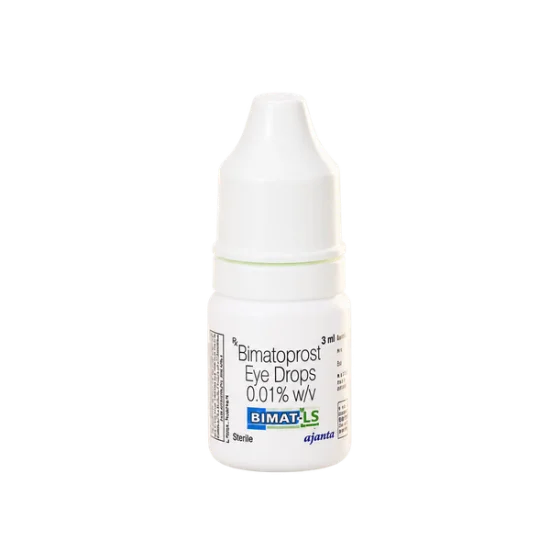
Bimat is a single-ingredient prostamide eye-drop treatment containing bimatoprost 0.01% w/v. It lowers eye pressure by increasing fluid drainage from the eye, unlike oral treatments that act through the body and may involve a different route and monitoring approach.

Common mistakes

Ophthalmology teams often see the same preventable problems with bimatoprost. Most are related to technique rather than failure of the medicine itself.

A common mistake is placing the tip directly against the eye. This can contaminate the solution and may scratch an already irritated ocular surface. Another is blinking hard or rubbing immediately after the drop, which pushes medication onto the eyelid skin.

Using bimatoprost more often than prescribed is also counterproductive. Prostaglandin-related drops are usually dosed once daily because more frequent use can reduce pressure-lowering benefit and increase redness.

People with glaucoma sometimes stop drops after a normal pressure reading. That reading usually reflects successful treatment, not resolution of the underlying drainage problem.

After instilling the drop, close the eye gently and press one finger at the inner corner near the nose for about one minute. This reduces drainage into the tear duct and can limit medicine reaching the nose and throat.

What doctors say

Clinically, Bimat is expected to lower raised eye pressure when used consistently as prescribed. Regular evening use and ongoing pressure monitoring are important because glaucoma may progress without noticeable symptoms. Consult the prescribing physician if eye pressure remains elevated, vision changes, or treatment concerns occur.

Common questions

Can older adults use Bimat?

Older adults commonly use bimatoprost for glaucoma and ocular hypertension. Age alone does not rule out treatment, though eye-surgery history, macular disease, contact lenses, dexterity, and use of other drops can affect the most suitable plan. The American Academy of Ophthalmology’s Preferred Practice Pattern, updated in 2020, supports individualized pressure-lowering therapy based on ocular findings rather than age alone. A simple dosing routine and correct bottle handling matter more when hand tremor or arthritis is present.

Do you offer anonymous delivery?

Your order will be securely packed and shipped within 24 hours. This is exactly what your package will look like (images of an actual item sent). It has the size and look of a regular private letter (9.4x4.3x0.3 in.) and its contents cannot be seen.

Comparison

Comparison table: Eyelash Growth

Customer Feedback on Bimat

Harry V., 44
Orlando
Four months
Verified
Rating: 5 out of 5
I had no obvious symptoms before treatment, so building the evening routine took effort. I stayed consistent, and the pressure-control plan felt manageable once it became part of brushing my teeth.
Oct 12, 2026
James, 42
Baltimore
Three months
Verified
Rating: 4 out of 5
The bottle was easy to work into my schedule. My eyes felt comfortable, and I was satisfied with how simple the routine became after the first week.
Oct 20, 2026
Alan, 62
Atlanta
Six weeks
Verified
Rating: 3.5 out of 5
My eye felt mildly scratchy for the first several days, mostly in the morning. The feeling settled, but I became more careful about not touching the dropper tip to my lashes.
Oct 24, 2026
Robert L., 57
Boston
Five months
Verified
Rating: 4.5 out of 5
I set a recurring alarm and rarely missed a dose after that. The nightly use was straightforward, and I was pleased that it did not interfere with my workday.
Nov 1, 2026
Colin, 69
Portland
One month
Verified
Rating: 3.5 out of 5
My eyes became redder than I expected during the first two weeks. I paused treatment after discussing the irritation with my eye specialist, who adjusted the plan.
Nov 9, 2026

Sources

  1. Food and Drug Administration (2024). LUMIGAN (bimatoprost ophthalmic solution) prescribing information
  2. DailyMed, U.S. National Library of Medicine (2024). Bimatoprost ophthalmic solution: drug label information
Get our free app Shop faster and track your orders 4.0 · 266 reviews Install