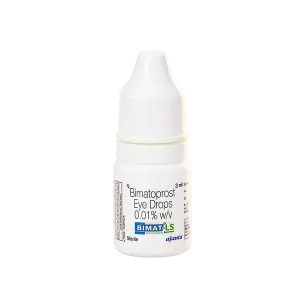
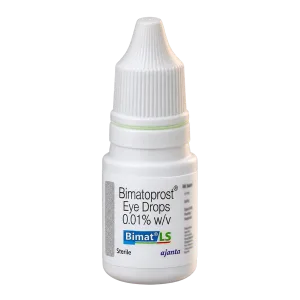
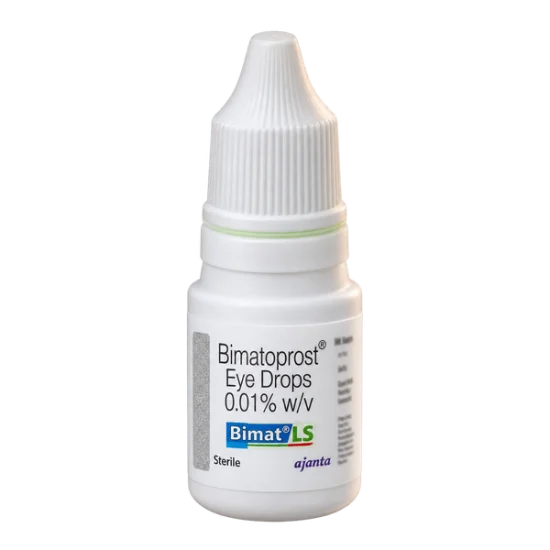
Bimat bottle
4.3 (3 customer reviews)Bimat bottle is used under prescriber direction for eye-pressure control or inadequate eyelash growth. Its benefit depends on the treatment goal: it can lower pressure inside the eye or support longer, fuller eyelashes over time.
Overview
Bimat bottle uses bimatoprost, a prostaglandin analog that changes signaling in the eye and hair follicles. It is used under prescriber direction for elevated intraocular pressure and, when applied to the upper eyelid margin, for inadequate eyelash growth.
Therapeutic indications
It is used under prescriber direction for elevated intraocular pressure and, when applied to the upper eyelid margin, for inadequate eyelash growth.
For eyelash hypotrichosis, bimatoprost is applied sparingly along the upper eyelid margin.
For elevated eye pressure, the solution is placed into the eye according to an ophthalmologist’s directions.
How it affects the body
Bimatoprost produces its ocular-pressure effect by increasing fluid outflow from the eye. Its eyelash effect appears to result from prolonging the anagen, or growth, phase of the lash follicle.
Bimatoprost lowers eye pressure by improving uveoscleral outflow, meaning it helps fluid leave the eye through an alternative drainage pathway.
Reasons not to use it
This treatment is not for you if you have had an allergic reaction to bimatoprost or another ingredient in the prescribed solution.
Tell the prescriber about uveitis, macular edema, aphakia, a torn posterior lens capsule, prior eye surgery, or active eye infection. Bimatoprost can require closer monitoring in these settings.
When this is not for you
This treatment is not for you if you have had an allergic reaction to bimatoprost or another ingredient in the prescribed solution. Tell the prescriber about eye inflammation, macular swelling, previous eye surgery, a damaged lens capsule, or an active eye infection before starting treatment.
Possible side effects
Most adverse effects are local and involve the eye, eyelid, or surrounding skin. The FDA labeling for bimatoprost identifies conjunctival redness, itching, dry eye symptoms, eyelid redness, and skin darkening among reported reactions. [2]
Common Local Reactions
Mild stinging immediately after application, temporary itching, dryness, and eye redness can occur. These effects may settle, yet worsening irritation deserves clinical review.
Some users notice darker eyelid skin or increased eyelash length, thickness, and pigmentation. The changes can be uneven if the solution repeatedly reaches one side of the face more than the other.
Pigmentation and Eyelash Changes
Bimatoprost can gradually increase brown pigmentation in the iris, especially in people with mixed-color irises. Iris color change may be permanent, even after treatment ends.
Unwanted hair growth can occur where solution repeatedly reaches skin outside the lash line. Eyelash asymmetry is also possible when application is inconsistent.
Eye redness after starting therapy can occur, yet persistent burning, blurred vision, or swelling should not be dismissed as part of the routine.
Seek urgent eye care for eye pain, sudden vision loss or marked vision change, severe redness, light sensitivity, pus-like discharge, or substantial eyelid swelling. These symptoms can indicate a problem beyond expected mild irritation.
Formulation
Bimat bottle contains bimatoprost in an ophthalmic solution. Bimatoprost belongs to the prostaglandin analog class, a group of medicines that influence fluid drainage from the eye and can extend the eyelash growth phase. The FDA describes bimatoprost as a prescription treatment with distinct instructions for ocular-pressure management and upper-eyelid application. [1]
Active Ingredient and Drug Class
Bimatoprost is the active ingredient in Bimat bottle. It works on prostamide-sensitive pathways in eye tissues, helping aqueous humor drain more easily and reducing intraocular pressure.
The solution is intended for eye-area use only. It must not be swallowed or used on other skin areas.
Eyelash Hypotrichosis and Elevated Eye Pressure
For eyelash hypotrichosis, bimatoprost is applied sparingly along the upper eyelid margin. The aim is to support gradual increases in lash length, thickness, and darkness.
For elevated eye pressure, the solution is placed into the eye according to an ophthalmologist’s directions. Lowering intraocular pressure can help protect the optic nerve in people with open-angle glaucoma or ocular hypertension. These are different clinical uses with different risks and follow-up needs.
Dosage and administration
Bimat Bottle Volumes and Expected Duration
Bottle duration varies widely because a glaucoma routine may involve one or both eyes, while eyelash treatment uses a very small amount along each upper lash line. Drop size, accidental spillage, and the prescriber’s regimen also affect how long a bottle remains usable.
Using more solution does not improve results faster.
Bottle Longevity Factors
A bottle can lose usable solution sooner when the tip touches lashes, skin, fingers, or the eye. Contact can transfer bacteria or cosmetic residue into the bottle and may also leave too much liquid on the eyelid.
For eyelash use, one controlled application to each upper eyelid is the intended approach. Reapplying because the line looks wet increases skin exposure without speeding lash growth.
Labeling and Application Differences
Eyelash treatment commonly uses a sterile, single-use applicator for each upper lid. The solution should not be placed on the lower lash line because fluid can spread onto surrounding skin and encourage hair growth outside the desired area.
Ophthalmic treatment requires a drop placed into the conjunctival sac, the small pocket between the lower eyelid and eye. The same bottle should not be shared between people.
Bimat Bottle Application and Dosing Routine
Bimat bottle is a prescription product. The prescribed regimen depends on whether the treatment goal is eyelash hypotrichosis or elevated intraocular pressure, so the clinician’s directions take priority over any general routine.
Upper Eyelid Margin Application
For prescribed eyelash treatment, the usual routine is one careful evening application to each upper eyelid margin.
- Wash and dry hands before application.
- Remove contact lenses and eye makeup.
- Place a small amount of solution on a clean sterile applicator.
- Draw the applicator once along the skin at the base of the upper lashes.
- Blot any run-off from nearby skin.
- Discard the applicator after one use.
Do not apply the solution directly into the eye for lash growth. Do not use it on the lower lid. Reusing an applicator may transfer skin oils or bacteria back into the solution.
Ophthalmic Dosing for Glaucoma
For glaucoma or ocular hypertension, use Bimat bottle exactly as prescribed for the eye or eyes being treated. Place the drop without touching the bottle tip to the eyelid, lashes, or eye surface.
After instilling an eye drop, gently close the eye. Light pressure at the inner corner of the closed eyelid can reduce drainage into the nose and throat. If other eye drops are also prescribed, leave time between products so one does not wash out the other.
Medication Handling
Contact lenses should be removed before using ophthalmic bimatoprost because many ophthalmic solutions contain benzalkonium chloride, which may be absorbed by soft lenses. Wait at least 15 minutes before reinserting lenses when that preservative is present in the prescribed product.
Comparison
Bimatoprost is one member of the prostaglandin analog class. These medicines lower eye pressure by improving uveoscleral outflow, meaning they help fluid leave the eye through an alternative drainage pathway.
Evidence for eyelash growth is specific to bimatoprost-based eyelash treatment rather than a class-wide promise. The European Medicines Agency describes prostaglandin analogs as important ocular hypotensive therapies, though product-specific indications remain decisive. [3]
Selection Factors for Eyelash Treatment
Bimatoprost can support visible lash changes with consistent use, but results vary. Maintenance is usually needed because lashes return toward their prior appearance after stopping treatment.
The trade-off is straightforward: potential lash improvement requires careful daily application and acceptance of possible irritation, skin darkening, or eye-color change. Someone whose priority is glaucoma control needs an ophthalmologist-led regimen rather than a cosmetic-style eyelid routine.
Common mistakes
Common Patient Mistakes
- Applying solution to the lower lash line.
- Letting the bottle tip touch the eye, lashes, or fingers.
- Reusing a lash applicator.
- Adding extra solution after missing an application.
- Wearing contact lenses during application.
- Stopping after a short time because changes are gradual.
- Assuming new lash growth remains permanently after treatment ends.
What doctors say
Doctor Perspectives
Clinicians generally look for two things: the right indication and a repeatable technique. For glaucoma, pressure measurements and optic-nerve assessment determine whether treatment is adequate. For eyelash hypotrichosis, the focus is even application, tolerance, and realistic expectations.
Visible lash changes take consistent use over weeks. They do not appear overnight.
A clinician should reassess treatment when eye irritation persists, lashes become noticeably uneven, pigmentation changes are concerning, or vision changes occur.
Clinician Review Triggers
Routine questions include a missed dose, mild temporary stinging, or uncertainty about timing with other eye drops. Urgent review is needed for severe pain, sudden visual disturbance, intense redness, marked swelling, or signs of an eye infection.
Common questions
How long does one application of Bimat bottle keep working?
One application is intended to support the prescribed daily treatment routine rather than provide a lasting one-time effect. For eyelash use, bimatoprost needs regular application to influence the lash growth cycle; for eye pressure, its effect depends on the ophthalmologist’s dosing schedule. FDA prescribing information published in 2017 supports once-daily use for approved bimatoprost regimens, with indication-specific directions. [4]
How long does a Bimat bottle course last, and is long-term use acceptable?
A course length depends on the treatment goal and response. Eyelash changes may require ongoing use to be maintained, while glaucoma therapy can be long term with scheduled eye monitoring. FDA prescribing information from 2017 describes ongoing use when clinically appropriate. The FDA recognizes bimatoprost as a treatment that may be used chronically when prescribed, though continued tolerance, pressure control, and eye findings guide whether it remains appropriate.
Can Bimat bottle be used during pregnancy or breastfeeding?
Pregnancy and breastfeeding require an individualized prescriber decision because systemic absorption from eye drops can occur, even though it is limited. The FDA labeling advises weighing potential benefit against potential risk during pregnancy. FDA labeling from 2017 provides the relevant prescribing information. For breastfeeding, a clinician can assess whether treatment timing, an alternative approach, or closer observation is appropriate. FDA prescribing information from 2017 can inform that discussion.
Can older adults use Bimat bottle?
Older adults may use bimatoprost when it is prescribed for their eye condition. Age alone does not prevent treatment, yet older patients may have cataract surgery history, multiple eye medicines, dry eye, or dexterity issues that affect technique. The EMA’s ophthalmology information supports individualized assessment of eye disease, concurrent therapy, and tolerance in adult patients. EMA product information from 2020 provides additional context.
How should Bimat bottle be stored at home and while travelling?
Keep the bottle closed tightly and protected from contamination, excessive heat, and direct light. Avoid leaving it in a hot vehicle, where temperature changes can affect ophthalmic products. The FDA’s ophthalmic-product guidance supports clean handling: do not let the dropper tip contact hands, lashes, skin, or any surface. FDA guidance from 2023 provides further information on ophthalmic product handling.
Do you offer anonymous delivery?
Your order will be securely packed and shipped within 24 hours. This is exactly what your package will look like (images of an actual item sent). It has the size and look of a regular private letter (9.4x4.3x0.3 in.) and its contents cannot be seen.
Comparison
How should Bimat bottle be stored at home and while travelling?
Keep the bottle closed tightly and protected from contamination, excessive heat, and direct light. Avoid leaving it in a hot vehicle, where temperature changes can affect ophthalmic products. The FDA’s ophthalmic-product guidance supports clean handling: do not let the dropper tip contact hands, lashes, skin, or any surface. FDA guidance from 2023 provides further information on ophthalmic product handling.
Customer Feedback on Bimat bottle
Sources
- FDA (2017). LATISSE (bimatoprost ophthalmic solution) prescribing information.
- FDA (2017). LUMIGAN (bimatoprost ophthalmic solution) prescribing information.
- European Medicines Agency (2020). European public assessment report and product information for bimatoprost-containing ophthalmic medicines.
- FDA (2017). Bimatoprost ophthalmic solution: clinical pharmacology and prescribing information.