Skip to content
Save up to 80% Fast & Discrete Delivery
Diflucan
Quality products
Fast & Discrete Delivery
Money-back guarantee

Diflucan

3.9 (4 customer reviews)
Delivery: 4-7 business days
Payment
24/7 Support
Active ingredient: Fluconazole

Free bonus tablets with every order: 4 on any order, 8 over $112.00, 12 over $222.88, 16 over $334.88

256-bit SSL
Certified pharmacy
Money-back guarantee

Fluconazole in Diflucan blocks ergosterol production, a substance fungi need to maintain their cell membranes. Diflucan capsules are used for Candida infections, including vaginal candidiasis and oral thrush, helping stop fungal growth so affected tissue can recover.

Overview

Diflucan contains fluconazole, a systemic antifungal from the triazole, or azole antifungal, class. Fluconazole is the active ingredient in Diflucan and is used against susceptible fungal infections caused by organisms such as Candida. The FDA (Food and Drug Administration) recognizes fluconazole as an antifungal treatment for several forms of candidiasis, from mucosal infections to severe invasive disease [1].

Therapeutic indications

Diflucan treats Candida infections at several body sites. Vaginal candidiasis, often called a vaginal yeast infection, may cause itching, burning, soreness, and thick white discharge. Oral candidiasis, also called oral thrush, can cause creamy white plaques on the tongue, inner cheeks, gums, or palate.

Fluconazole is also used under clinician direction for esophageal candidiasis, recurrent mucosal Candida infection, and prevention of certain fungal infections in people with severely weakened immune systems. In specialist care, it can form part of treatment for cryptococcal meningitis, a serious fungal infection of the membranes around the brain and spinal cord. WHO identifies Candida and Cryptococcus among fungal pathogens that can create major risks in vulnerable patients [2].

Mucosal and Superficial Candidiasis Applications

Common mucosal uses include:

  • Vaginal candidiasis: genital itching, irritation, redness, burning, and discharge linked to Candida overgrowth.
  • Oral thrush: white plaques, altered taste, mouth soreness, and discomfort when eating.
  • Esophageal candidiasis: painful swallowing, difficulty swallowing, and pain behind the breastbone.
  • Recurrent candidiasis: repeated episodes that may need a clinician-led plan rather than repeated self-treatment.
  • Cryptococcal meningitis and fungal meningitis: specialist-managed infections that require longer, closely monitored antifungal therapy.

A first episode of vaginal symptoms is not always Candida. Strong odor, pelvic pain, fever, sores, or unusual bleeding point toward other causes and need clinical assessment.

A yeast infection can feel better before the infection has fully settled. Avoid adding another antifungal dose early unless the treatment plan specifically calls for it.

How it affects the body

Fungal cells need ergosterol to build stable cell membranes. Fluconazole blocks a fungal enzyme called lanosterol 14-alpha-demethylase, reducing ergosterol production. The membrane becomes unstable, and the fungus cannot grow normally.

Human cells use cholesterol rather than ergosterol. That difference allows fluconazole to target fungal metabolism more selectively than human tissue. The medicine can still affect liver enzyme systems, which explains why interaction screening matters.

Reasons not to use it

Avoid or use Diflucan only under prescriber supervision when any of the following applies:

  • Previous severe allergy to fluconazole or related azole antifungals.
  • A history of long QT syndrome, serious arrhythmia, or unexplained fainting.
  • Active liver disease or previous medication-related liver injury.
  • Significant kidney impairment, since repeated-dose regimens may need adjustment.
  • Pregnancy, unless a clinician has judged the expected benefit to outweigh the risk.
  • Use of warfarin, certain statins, sulfonylurea diabetes medicines, phenytoin, cyclosporine, tacrolimus, rifabutin, or medicines with QT-prolonging potential.

Fluconazole inhibits CYP2C9, CYP2C19, and CYP3A4 liver enzymes. In plain terms, it can slow the breakdown of other medicines and raise their blood concentrations. The FDA prescribing information lists clinically relevant interactions, including increased bleeding risk with warfarin and muscle toxicity risk with some statins [4].

When this is not for you

This is NOT for you if you have had a serious allergic reaction to fluconazole or another azole antifungal, such as ketoconazole, itraconazole, or voriconazole. It is also unsuitable with certain interacting medicines that can create dangerous heart-rhythm effects.

Possible side effects

Most people tolerate a short fluconazole course without major problems. Headache, nausea, abdominal discomfort, diarrhea, indigestion, and changes in taste are among the more common effects. These symptoms are often mild and temporary.

Rare reactions need faster attention. Stop using Diflucan and seek urgent medical care for facial swelling, trouble breathing, blistering or peeling skin, widespread rash, fainting, irregular heartbeat, dark urine, pale stools, or yellowing of the skin or eyes. These signs can indicate a severe allergic reaction, serious skin reaction, heart-rhythm problem, or liver injury.

A new rash after fluconazole should not be treated as a minor nuisance if it spreads, blisters, affects the mouth or eyes, or comes with fever. These are reasons to seek urgent assessment.

Fluconazole can prolong the QT interval in susceptible people. The QT interval is part of the heart’s electrical cycle. A prolonged QT interval may trigger a dangerous irregular rhythm, especially when fluconazole is combined with medicines that also affect cardiac rhythm or blood levels of other drugs.
Formulation

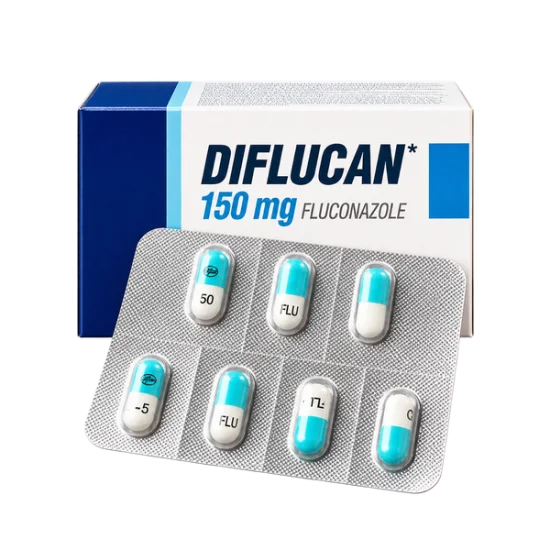
Diflucan contains fluconazole. Dosing differs between strengths and between users, so no single amount suits everyone. Fluconazole reaches the bloodstream after swallowing and penetrates well into body fluids and tissues.

Dosage and administration

For uncomplicated vaginal candidiasis, the appropriate Diflucan regimen varies between users and strengths, so there is no single amount that suits everyone. The capsule may be taken with water, with or without food. Fluconazole dosing differs between strengths and between users, so there is no single amount that suits everyone for oral thrush, esophageal candidiasis, recurrent infection, prevention, or systemic fungal disease.

Swallow the capsule whole. Do not split, crush, or chew it. A capsule is designed to deliver its contents after swallowing, and opening or chewing it can leave part of the dose behind in the mouth or make the dose harder to take accurately.

  • Take the prescribed regimen at the same time of day when a repeated course is used.
  • If a dose is missed during a multi-day course, take it when remembered unless the next dose is near.
  • Do not double doses to compensate for a missed capsule.
  • Complete a prescribed multi-day course even when symptoms ease early.
  • Keep a record of repeat vaginal symptoms, including timing around antibiotics, menstrual cycles, diabetes control, or immune-suppressing treatment.
For a single-dose vaginal candidiasis regimen, symptom relief may begin within a few days. Persistent symptoms after several days can mean resistant Candida, a different diagnosis, or a more complicated infection.

The capsule is not a substitute for the longer regimens used for esophageal candidiasis, cryptococcal meningitis, or antifungal prophylaxis. Those uses require individualized dosing and monitoring because kidney function, liver status, immune suppression, and other medicines can change the appropriate regimen. IDSA guidance separates uncomplicated vaginal candidiasis from recurrent and complicated Candida infections for this reason [3].

Comparison

Treatment choice depends on the infection site, pregnancy status, recurrence pattern, immune status, and medicine interactions. Fluconazole is an oral systemic antifungal. Topical azoles act mainly at the application site, while other systemic triazoles are reserved for broader or more resistant fungal disease.

Treatment approach Route and mechanism Typical role
Fluconazole Oral triazole antifungal that blocks ergosterol synthesis Vaginal candidiasis, oral candidiasis, esophageal candidiasis, selected systemic Candida infections
Clotrimazole, miconazole, terconazole, tioconazole Local azole antifungals used on skin or vaginal tissue Localized vulvovaginal or skin fungal infections
Itraconazole or voriconazole Systemic triazole antifungals with broader specialist uses Selected resistant, invasive, or organism-specific fungal infections
Nystatin Local polyene antifungal that disrupts fungal membranes Oral or skin Candida infections in selected situations
Terbinafine Systemic or topical allylamine antifungal Dermatophyte infections such as athlete’s foot or nail fungus

Topical azoles can be useful when treatment needs to stay local. Fluconazole may be preferred when an oral regimen is appropriate and interaction risk is low. Terbinafine is not a standard choice for vaginal candidiasis because it targets dermatophytes more reliably than Candida.

Common mistakes

Several avoidable mistakes can make a Candida infection harder to manage:

  • Taking fluconazole for discharge with a strong fishy odor, pelvic pain, or fever, which can signal a condition other than vaginal candidiasis.
  • Taking extra capsules because itching remains after the first day.
  • Repeating short courses frequently without identifying why symptoms keep returning.
  • Combining Diflucan with a new medicine without considering interaction risks.
  • Assuming every episode after antibiotics is a yeast infection.
  • Stopping a prescribed extended course as soon as symptoms improve.
  • Ignoring recurrent oral thrush, which can be associated with inhaled corticosteroid use, diabetes, dentures, or immune-system problems.

Tight clothing, prolonged damp clothing, fragranced genital products, and unnecessary vaginal cleansing may worsen irritation. These habits do not cause every yeast infection, yet removing them can reduce discomfort while treatment takes effect.

For people using inhaled corticosteroids, rinsing the mouth and spitting after each inhalation helps reduce the local steroid residue that can contribute to oral thrush.

What doctors say

Doctors commonly look for patterns: four or more episodes in a year, symptoms that return soon after treatment, poorly controlled diabetes, recent antibiotic exposure, immune suppression, or symptoms that do not fit candidiasis. Candida species differ in their sensitivity to azole antifungals. A treatment that worked in the past may not always work the same way later. A focused examination can separate recurrent candidiasis from other causes. Testing may guide the next treatment when symptoms persist.

Fluconazole is useful because it treats infection from inside the body rather than only at the skin or vaginal surface. Its limitation is interaction potential. A brief medication review can matter more than the duration of the antifungal course.

Common questions

Can a history of serious heart-rhythm problems rule out Diflucan?

Yes. Long QT syndrome, a prior serious arrhythmia, or unexplained fainting can make fluconazole inappropriate, especially alongside medicines that also prolong the QT interval. The FDA warning information describes this risk because fluconazole can affect drug concentrations and cardiac electrical activity. The 2011 FDA Diflucan prescribing information supports individualized review when rhythm risk factors are present.

Can Diflucan capsules be split, crushed, or chewed?

No. Swallow the capsule whole with water. Crushing or chewing can make the full dose harder to take and may leave medication in the mouth, which is not useful for a systemic antifungal treatment. FDA product information published in 2011 describes fluconazole as an oral treatment intended to be swallowed.

Can alcohol be used while taking Diflucan?

Alcohol does not create a classic direct reaction with fluconazole, yet both alcohol and fluconazole can burden the liver. Avoiding alcohol is sensible when you have liver disease, abnormal liver tests, or a multi-day antifungal regimen. The FDA’s 2011 safety information lists liver-related adverse reactions as a reason for caution.

What should I do if the expected result does not come?

Do not keep repeating capsules without reassessment. Symptoms that persist after several days, return soon after treatment, or include fever, pelvic pain, sores, or strong odor may not be uncomplicated Candida infection. CDC guidance from 2021 recommends clinical evaluation and testing for persistent or recurrent vulvovaginal symptoms.

Which habits can help or hinder recovery from vaginal candidiasis?

Wear breathable underwear, change out of wet clothing promptly, and avoid fragranced sprays, washes, and douches around genital tissue. Avoiding unnecessary antibiotics can also reduce Candida overgrowth when alternatives are medically appropriate. The CDC’s 2021 sexually transmitted infections guidance recognizes that recurrent symptoms need assessment rather than repeated self-treatment alone.

Can Diflucan be used during pregnancy or breastfeeding?

Pregnancy needs individualized medical guidance because oral fluconazole exposure is treated differently depending on dose, duration, and the infection being managed. Breastfeeding information is more reassuring for usual maternal treatment, since fluconazole passes into milk but is also used directly in infants under medical care. The NIH LactMed database reviewed fluconazole and breastfeeding information in 2024.

Can older adults use Diflucan?

Older adults can use fluconazole when it is clinically appropriate, though medication interactions and kidney function deserve closer attention. People in this age group are more likely to use warfarin, diabetes medicines, statins, or heart-rhythm drugs that may interact with fluconazole. WHO fungal disease guidance from 2022 also emphasizes that host factors and concurrent illness shape antifungal treatment decisions.

Do you offer anonymous delivery?

Your order will be securely packed and shipped within 24 hours. This is exactly what your package will look like (images of an actual item sent). It has the size and look of a regular private letter (9.4x4.3x0.3 in.) and its contents cannot be seen.

Comparison

Comparison table: Antifungals

Customer Feedback on Diflucan

Ruth, 46
San Diego
One day
Verified
Rating: 4.5 out of 5
I used Diflucan for itching and thick discharge that had started after a course of antibiotics. By the second day the irritation was much lower, and by the end of the week I felt normal again. Taking one capsule was simple.
Oct 14, 2026
Louise, 41
Memphis
One day
Verified
Rating: 4 out of 5
I had used topical products before, but the capsule was easier for me to manage. The burning eased over the next two days, and I was satisfied with the result. I did not need to plan my day around repeated applications.
Oct 22, 2026
Zoe, 45
Miami
One day
Verified
Rating: 5 out of 5
My symptoms were typical for the yeast infections I had experienced before. I took the capsule in the evening, and the itching was gone within a few days. It was a straightforward treatment for me.
Oct 26, 2026
Joanne H., 57
New York
One day
Verified
Rating: 2 out of 5
I expected the same quick result I had years ago, but the irritation did not improve after several days. I stopped assuming it was a yeast infection and spoke with my clinician. The cause needed a different treatment.
Nov 9, 2026

Sources

  1. FDA (2011). Diflucan (fluconazole) Prescribing Information
  2. WHO (2022). WHO Fungal Priority Pathogens List to Guide Research, Development and Public Health Action
  3. Infectious Diseases Society of America (2016). Clinical Practice Guideline for the Management of Candidiasis: 2016 Update by the Infectious Diseases Society of America
  4. Centers for Disease Control and Prevention (2021). Sexually Transmitted Infections Treatment Guidelines, 2021
Get our free app Shop faster and track your orders 4.0 · 266 reviews Install