Flibanserin
3.8 (3 customer reviews)For premenopausal women with acquired, generalized Hypoactive Sexual Desire Disorder (HSDD) that causes marked personal distress, Flibanserin is a non-hormonal oral treatment. It acts on brain neurotransmitters involved in sexual motivation rather than changing hormone levels or genital blood flow. [1]
Overview
The treatment is intended for low desire that developed after a period of typical desire and occurs across situations, rather than only with one partner or during a temporary stressful period.
Flibanserin does not contain estrogen, testosterone, or another sex hormone.
Therapeutic indications
The treatment is intended for low desire that developed after a period of typical desire and occurs across situations, rather than only with one partner or during a temporary stressful period.
A useful distinction is whether low desire feels persistent, generalized, and personally upsetting. The level of distress matters as much as the frequency of sexual thoughts.
How it affects the body
Flibanserin works in the brain, where sexual interest begins before any physical arousal response. It acts as an agonist at the 5-HT1A receptor and an antagonist at the 5-HT2A receptor. These are serotonin receptors that influence motivation, mood, and reward signaling.
By changing activity at these receptors, Flibanserin reduces some serotonin-related inhibitory signaling while increasing dopamine and norepinephrine activity in selected brain pathways. Dopamine is linked with motivation. It also contributes to reward anticipation. Norepinephrine contributes to alertness and attention. This receptor balance may help restore sexual desire in women with HSDD, though results vary from person to person.
Flibanserin is not an immediate arousal agent. It does not directly widen genital blood vessels, create automatic sexual interest, or correct pain during sex. A clinical trial program reviewed by the FDA found that some women experienced meaningful improvements in desire and satisfying sexual events, while others had little change. [2]
Reasons not to use it
Flibanserin can lower blood pressure and cause syncope, which means fainting from a temporary reduction in blood flow to the brain.
- Nefazodone
- Certain fungal infection medicines, including azole antifungals
- Some antibiotics, including clarithromycin
- Several HIV-1 infection medicines
- Some hepatitis C infection medicines
- Grapefruit juice or grapefruit-containing products
- Sedatives, opioid pain medicines, and other substances that markedly cause drowsiness
When this is not for you
This medication is not for you if you have liver impairment or use moderate or strong CYP3A4 inhibitors. CYP3A4 is a liver and intestinal enzyme that breaks down many medicines. Blocking it can raise Flibanserin exposure and increase the chance of severe hypotension, syncope, and sedation.
The prescriber should also know about antidepressants, anxiety medicines, blood-pressure medicines, herbal sleep aids, and supplements marketed for relaxation. A supplement can still intensify drowsiness even when it is not a prescription drug.
Keep a written list of every medicine, supplement, and occasional treatment you use. Short antibiotic or antifungal courses are easy to overlook, yet they can create a major interaction.
Possible side effects
The most frequent adverse reactions involve the nervous system and digestive tract. Dizziness, sleepiness, nausea, tiredness, dry mouth, and difficulty falling asleep can occur. In FDA-reviewed studies, dizziness and somnolence each affected roughly one in ten women, while nausea and fatigue were also common. [3]
Sleepiness can be stronger when Flibanserin is combined with alcohol, sedatives, opioids, antihistamines that cause drowsiness, or medicines that raise Flibanserin levels.
A fainting episode is never something to push through. Symptoms such as severe lightheadedness, blurred vision, weakness, nausea with sweating, or a feeling that you may pass out need prompt attention.
If you wake during the night after taking Flibanserin, rise slowly and keep a light on. Sudden standing is a common trigger for dizziness when blood pressure has dropped.
Formulation
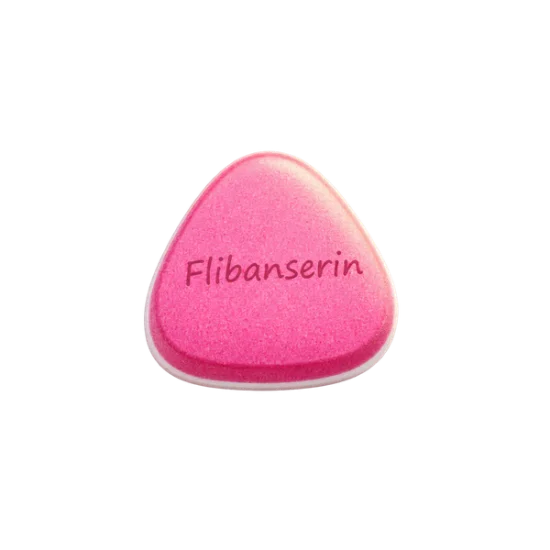
Flibanserin is a non-hormonal treatment. It does not contain estrogen, testosterone, or another sex hormone, and it acts on brain neurotransmitters involved in sexual motivation.
Dosage and administration
- Route: Take Flibanserin orally.
- Frequency: Take it once daily.
- Time of day: Take the dose at bedtime because sleepiness and dizziness may occur shortly after dosing.
- Dose: The exact dose in mg or ml is determined individually; no specific amount is established in the provided information.
- Meals: No before- or after-meal instruction is established in the provided information.
- Duration: Use it for the duration individually determined for the treatment of acquired, generalized HSDD.
- Alertness: Do not drive, operate machinery, or perform tasks requiring full alertness for at least six hours after a dose, or longer if you still feel impaired.
- Alcohol: Wait at least two hours after one or two standard alcoholic drinks before the bedtime dose; after three or more drinks, skip that night's dose. [4]
Comparison
Bremelanotide is another FDA-approved pharmacological option for premenopausal women with acquired, generalized HSDD. It is used differently and has its own adverse-effect profile, including nausea and temporary blood-pressure changes.
Common mistakes
Several patterns can reduce benefit or increase adverse reactions:
- Taking Flibanserin before daytime activities instead of at bedtime
- Expecting an on-demand effect before a planned sexual encounter
- Combining it with alcohol close to the dose
- Forgetting temporary treatments such as antibiotics or antifungals when reviewing interactions
- Continuing despite recurrent fainting, profound dizziness, or dangerous sedation
- Assuming that pain during sex, vaginal dryness, or SSRI-related sexual dysfunction will automatically improve with Flibanserin
Another common mistake is judging the treatment after only a few doses. Flibanserin works through ongoing receptor-level changes, so a single evening does not show whether it will help.
What doctors say
In clinical practice, the key expectation is gradual change rather than an abrupt switch in desire. Doctors often assess whether a woman notices more spontaneous sexual thoughts, greater interest in intimacy, or less distress about low desire over time. These changes can be meaningful even when they are subtle.
Clinicians also look for factors that can blunt the response. Poor sleep, untreated anxiety, alcohol use near the bedtime dose, and interacting medicines may all make the experience less predictable. Flibanserin has a defined role in HSDD, yet it does not treat every contributor to sexual dissatisfaction.
Common questions
Which symptoms require stopping Flibanserin and seeking urgent medical care?
Stop Flibanserin and seek urgent medical assessment for fainting, near-fainting, severe dizziness, confusion, chest pain, trouble breathing, facial swelling, or a widespread rash. These symptoms can signal clinically significant hypotension, syncope, or a serious allergic reaction. The 2019 FDA prescribing information warns that low blood pressure and loss of consciousness are more likely with alcohol or CYP3A4-inhibiting medicines. Tell the treating clinician when the last dose was taken and whether alcohol, antibiotics, antifungals, or sedatives were also used.
How long does a Flibanserin course last, and is long-term use acceptable?
Flibanserin is used as ongoing treatment when benefit outweighs adverse effects and the indication remains appropriate. Response should be reassessed after a sustained trial rather than after isolated doses, because the medicine is not intended for on-demand use. The 2019 FDA prescribing information supports discontinuation when there is no improvement after an adequate treatment period. Continued use also requires periodic review of new medicines, alcohol habits, liver health, and persistent sedation.
What should happen if the expected result does not appear?
A limited response should prompt a review of the original HSDD diagnosis and possible barriers to benefit. The 2019 FDA prescribing information and sexual-medicine guidance emphasize checking for depression, anxiety, relationship distress, painful intercourse, menopause-related symptoms, sleep disruption, and sexual adverse effects from other medicines. A clinician may decide that Flibanserin is not the best fit or that another contributing problem needs direct treatment. Increasing the dose independently is unsafe.
What happens when Flibanserin is stopped, and is tapering required?
Flibanserin does not require tapering for withdrawal prevention. It can be stopped when advised because it does not produce physical dependence in the way that certain sedatives or opioid medicines can. The 2019 FDA safety materials do not describe a withdrawal syndrome from discontinuation. Low desire may return if the underlying HSDD remains active, which reflects the condition rather than withdrawal.
How soon can the effect of Flibanserin become noticeable?
Changes are gradual and may include more frequent sexual thoughts, increased interest in intimacy, or less distress around low desire. The clinical trials used sustained daily treatment and evaluated outcomes across time rather than after one planned sexual event. In the 2016 JAMA Internal Medicine meta-analysis, average benefits were modest, meaning some women respond clearly while others do not. The practical measure is whether desire and related distress improve enough to matter to the individual woman.
Which concrete condition rules out Flibanserin use?
Liver impairment rules out Flibanserin use because reduced liver metabolism can raise drug levels and make hypotension or syncope more likely. The 2019 FDA prescribing information lists hepatic impairment as a contraindication regardless of severity. Moderate or strong CYP3A4 inhibitor use also rules it out for the same reason. This includes medicines such as nefazodone, selected antifungals, some antibiotics, and several treatments for HIV-1 or hepatitis C infection.
Do you offer anonymous delivery?
Your order will be securely packed and shipped within 24 hours. This is exactly what your package will look like (images of an actual item sent). It has the size and look of a regular private letter (9.4x4.3x0.3 in.) and its contents cannot be seen.
Customer Feedback on Flibanserin
Sources
- FDA (2015). FDA approves Addyi for treatment of hypoactive sexual desire disorder.
- Katz, M. et al. (2013). Efficacy of flibanserin in women with hypoactive sexual desire disorder: results from the BEGONIA trial.
- FDA (2019). Addyi (flibanserin) Prescribing Information.
- Jaspers, L. et al. (2016). Efficacy and Safety of Flibanserin for the Treatment of Hypoactive Sexual Desire Disorder in Women: A Systematic Review and Meta-analysis.