Duovir
3.9 (5 customer reviews)Lamivudine and zidovudine, the active ingredients of Duovir, are nucleoside reverse transcriptase inhibitors used in combination treatment for HIV-1 infection. Duovir helps reduce HIV replication as part of an individualized antiretroviral regimen.
Overview
Duovir is a prescription fixed-dose antiretroviral tablet containing lamivudine and zidovudine. Both belong to the nucleoside reverse transcriptase inhibitor class, often abbreviated as NRTIs.
Therapeutic indications
Duovir is a prescription fixed-dose antiretroviral tablet containing lamivudine and zidovudine. It is used with other HIV medicines to control HIV-1 infection, reduce viral replication, and support immune function. Duovir does not eradicate HIV, cure acquired immunodeficiency syndrome, or replace a complete antiretroviral regimen.
HIV attacks immune cells, especially CD4 cells. Without sustained treatment, progressive immune damage can increase the risk of opportunistic infections and other HIV-related conditions. Antiretroviral therapy lowers the amount of circulating virus, known as the viral load, and helps preserve immune function [1].
Clinical Role in HIV-1 Management
Duovir may form part of combination therapy when its two active ingredients fit the person’s resistance profile, previous treatment history, kidney function, liver status, blood counts, and other medicines. Treatment selection belongs to an HIV clinician because a regimen that works for one person may be unsuitable for another.
A very low or undetectable viral load shows a strong treatment response. It does not mean that HIV has left the body. Continued dosing and laboratory monitoring remain necessary to maintain viral suppression.
Treatment Monitoring
Monitoring commonly includes viral load, CD4 count, complete blood count, kidney function, and liver-related tests. The exact schedule depends on the wider regimen and the patient’s clinical risk. Results help the clinician assess viral suppression and treatment safety. Abnormal findings may require additional tests or a regimen review. Monitoring remains necessary even when the person feels well.
How it affects the body
HIV uses an enzyme called reverse transcriptase to convert its genetic material into DNA inside infected cells. Lamivudine and zidovudine are converted into active intracellular metabolites that resemble natural DNA building blocks. When incorporated into the growing viral DNA chain, they interrupt further DNA formation.
Using two NRTIs together targets the same viral process through two active agents.
Reasons not to use it
Before treatment, the HIV clinician needs to know about:
- Previous anemia, neutropenia, or other blood disorders
- Liver impairment or hepatitis
- Kidney dysfunction
- Previous pancreatitis
- A history of lactic acidosis
- Pregnancy or breastfeeding
- Previous exposure to antiretroviral medicines
- Current prescription medicines, nonprescription products, and supplements
Zidovudine can suppress bone marrow, so blood counts may be needed when baseline anemia or other risk factors are present. Kidney and liver function can influence treatment decisions and monitoring. Previous pancreatitis or unexplained abdominal pain also deserves attention before therapy begins.
Weight and Pediatric Use
The fixed combination may be unsuitable for children weighing less than 30 kg because the individual components may need weight-based adjustment. Pediatric treatment should be planned by an HIV specialist using age, weight, organ function, and the complete regimen.
When this is not for you
Pregnancy requires individualized HIV care. Maintaining viral suppression is a central treatment goal, while the clinician weighs the benefits and risks of each regimen. Breastfeeding decisions also depend on the applicable HIV-care plan and local clinical guidance.
Possible side effects
Lamivudine and zidovudine can cause nausea, vomiting, diarrhea, headache, tiredness, or reduced appetite. Mild symptoms may settle, but ongoing vomiting or diarrhea can cause dehydration and make it harder to maintain regular dosing.
Common Tolerability Effects
Digestive symptoms are easier to manage when fluids are maintained and doses are taken consistently. Persistent symptoms deserve clinical review, especially when they affect food intake, hydration, or adherence. Headache and tiredness can also have causes unrelated to Duovir, including HIV-related illness, anemia, infection, or another medicine.
Serious Toxicity Signals
Seek urgent medical assessment for:
- Severe or rapidly worsening weakness
- Rapid or difficult breathing
- Persistent vomiting
- Severe abdominal pain
- Yellowing of the skin or eyes
- Unusual bruising or bleeding
- Profound pallor
- Fainting, confusion, or marked drowsiness
Lactic acidosis is rare but serious. It can involve severe weakness, abdominal symptoms, vomiting, breathing changes, and progressive deterioration. Pancreatitis may cause severe, persistent upper-abdominal pain with vomiting. Zidovudine-associated bone-marrow suppression can present with worsening pallor, breathlessness on exertion, unusual bruising, or profound fatigue [3].
Immune Recovery and Body-Composition Changes
Immune reconstitution syndrome can occur when improving immune function produces inflammation against an infection that was already present. Fever, swollen lymph nodes, worsening inflammation, or a new flare of an existing infection can require assessment.
Changes in body fat distribution have been reported with long-term antiretroviral therapy. Fat loss or accumulation in different areas does not prove that HIV treatment is failing. The pattern should be discussed during routine HIV care.
Opportunistic infections remain possible when immune function is severely reduced. Duovir can support viral control within a complete regimen, but it does not make infection risk disappear immediately.
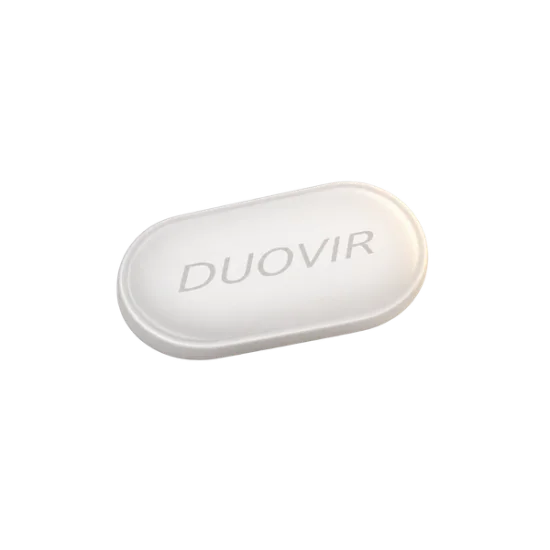
Formulation
Duovir contains two active substances: lamivudine and zidovudine. Both belong to the nucleoside reverse transcriptase inhibitor class, often abbreviated as NRTIs. The product is supplied as a fixed combination tablet rather than as two separate active ingredients that the patient adjusts independently.
Lamivudine and Zidovudine Functions
HIV uses an enzyme called reverse transcriptase to convert its genetic material into DNA inside infected cells. Lamivudine and zidovudine are converted into active intracellular metabolites that resemble natural DNA building blocks. When incorporated into the growing viral DNA chain, they interrupt further DNA formation.
Using two NRTIs together targets the same viral process through two active agents. This approach can simplify treatment, yet it does not remove the need for additional antiretroviral therapy when the prescribed regimen requires it.
Zidovudine has important blood-count considerations, including anemia and neutropenia. Lamivudine is generally well tolerated, though kidney function can influence how it is handled by the body. These differences matter when an HIV clinician assesses whether a fixed combination remains suitable [2].
Fixed-Combination Treatment
The amount and frequency prescribed for Duovir depend on the formulation, the wider HIV regimen, kidney and liver function, body weight, and prior treatment exposure. A change in strength or formulation requires a new prescribing decision. Do not split the treatment into self-selected doses or replace one component with another medicine without a documented regimen plan.
Dosage and administration
- Take Duovir exactly at the frequency prescribed for the complete HIV regimen.
- Swallow the tablet with water unless the prescribing instructions specify another method.
- It may be taken with or without food when permitted by the prescribed regimen.
- Take doses at consistent times to reduce missed doses.
- Do not change the amount because the viral load improves or symptoms disappear.
- If a dose is remembered while the next dose is not near, take it when remembered.
- If the next dose is near, skip the missed dose and return to the normal schedule.
- Never take two doses together to compensate for a missed dose.
- An overdose with severe symptoms requires urgent medical advice or poison-control guidance.
Kidney dysfunction, liver impairment, anemia, age, weight, pregnancy, and the rest of the HIV regimen can alter the appropriate treatment plan. A person who has missed several doses may need a clinician-led review because interrupted therapy can affect viral suppression and resistance management.
Comparison
Duovir and Duovir-N are pharmacologically different fixed combinations. They should not be treated as interchangeable products.
Nevirapine changes the pharmacological profile of Duovir-N. It can introduce clinically significant rash and liver-toxicity considerations, and its use depends on treatment history and the complete HIV regimen. Switching between Duovir and Duovir-N requires a prescriber’s decision based on resistance results, previous exposure, organ function, and concurrent treatment.
Do not combine the two products to create a stronger regimen. More antiretroviral tablets do not automatically produce better viral suppression.
Common mistakes
Common mistakes include:
- Doubling the next dose after a missed tablet
- Stopping when symptoms improve
- Sharing tablets with a partner or family member
- Taking Duovir with another HIV product without a regimen review
- Ignoring severe fatigue, pallor, bruising, jaundice, or abdominal pain
- Missing laboratory appointments
- Changing to Duovir-N without a prescribing decision
- Assuming an undetectable viral load means treatment can stop
What doctors say
In clinical practice, Duovir’s main advantage is the inclusion of two established NRTIs in one tablet. That can simplify a regimen for a person whose treatment history, resistance profile, and laboratory results support these ingredients. The limitation is equally clear: zidovudine-related anemia, organ-function concerns, and the need for continued monitoring can make another regimen more suitable.
Clinical decisions are guided by viral load, CD4 count, resistance testing, previous antiretroviral exposure, pregnancy status, kidney function, liver status, and coexisting illnesses. Guidelines from the U.S. Department of Health and Human Services describe antiretroviral care as a continuing regimen-management process rather than a single-tablet decision [4].
Common questions
Which condition rules out Duovir?
A serious allergy to lamivudine or zidovudine rules out Duovir, and severe anemia or significant organ impairment may also make it unsuitable. The FDA's 2018 prescribing information for lamivudine and zidovudine products describes blood-count, liver, kidney, and metabolic precautions that influence treatment selection. A history of pancreatitis or lactic acidosis requires specific clinical review before therapy begins.
Which habits help Duovir treatment work well?
Taking every prescribed dose on schedule, keeping laboratory appointments, and avoiding self-directed treatment changes support viral suppression. Alcohol does not replace the need for adherence, and heavy alcohol use can complicate liver assessment and general HIV care. WHO HIV guidance published in 2021 emphasizes sustained antiretroviral adherence and ongoing monitoring as foundations of treatment success.
Can Duovir be combined with other HIV medicines or supplements?
It may be combined with other antiretroviral medicines only when the complete regimen has been deliberately selected. Nevirapine, efavirenz, and atazanavir can change the clinical context, while supplements may affect organ function or interact with other medicines. The EMA's 2023 product-information framework for antiretrovirals supports reviewing the full medication list before making a regimen change.
Which symptoms mean Duovir should be stopped and urgent care sought?
Severe breathing difficulty, profound weakness, persistent vomiting, severe abdominal pain, jaundice, unusual bleeding, or rapidly worsening pallor require urgent medical assessment. The FDA's 2018 safety information for zidovudine-containing treatment links serious concern to anemia, bone-marrow suppression, pancreatitis, and lactic acidosis symptoms. Do not take an extra dose or make a permanent treatment change while waiting for symptoms to settle.
Is Duovir suitable for people under 18?
The fixed combination may not suit children weighing less than 30 kg because pediatric antiretroviral dosing can require separate weight-based components. The NIH Pediatric Antiretroviral Guidelines, updated in 2024, base treatment selection on age, weight, formulation, resistance history, and organ function. Children and adolescents need a specialist-led regimen rather than an adult schedule copied from another patient.
How long does one Duovir dose keep working?
Duovir is designed for regular scheduled dosing, not occasional use when symptoms appear. A single dose does not provide lasting protection against HIV replication for an indefinite period, and missed doses can reduce treatment reliability. The FDA's 2018 labeling for lamivudine and zidovudine describes continuous administration within an antiretroviral regimen, with dosing frequency determined by the prescribed formulation and clinical plan.
Do you offer anonymous delivery?
Your order will be securely packed and shipped within 24 hours. This is exactly what your package will look like (images of an actual item sent). It has the size and look of a regular private letter (9.4x4.3x0.3 in.) and its contents cannot be seen.
Customer Feedback on Duovir
Sources
- U.S. Department of Health and Human Services (2024). Guidelines for the Use of Antiretroviral Agents in Adults and Adolescents With HIV
- U.S. Food and Drug Administration (2018). Epivir (lamivudine) Prescribing Information
- U.S. Food and Drug Administration (2018). Retrovir (zidovudine) Prescribing Information
- World Health Organization (2021). Consolidated Guidelines on HIV Prevention, Testing, Treatment, Service Delivery and Monitoring: Recommendations for a Public Health Approach